
This recipe grades every item on profit against popularity, tells you what to re-price, re-cost or drop, then tracks the margin weekly so the gain sticks.
Public House expect a 3–4% GP improvement within weeks of running this, worth hundreds of thousands of pounds a year across the estate.
Thomas Foulser, consultant at Public House Group, on how the group runs menu engineering in Tenzo
“I have never seen such engagement and positive responses from right across a business as I’ve seen with the implementation of the Tenzo connector in Claude.”
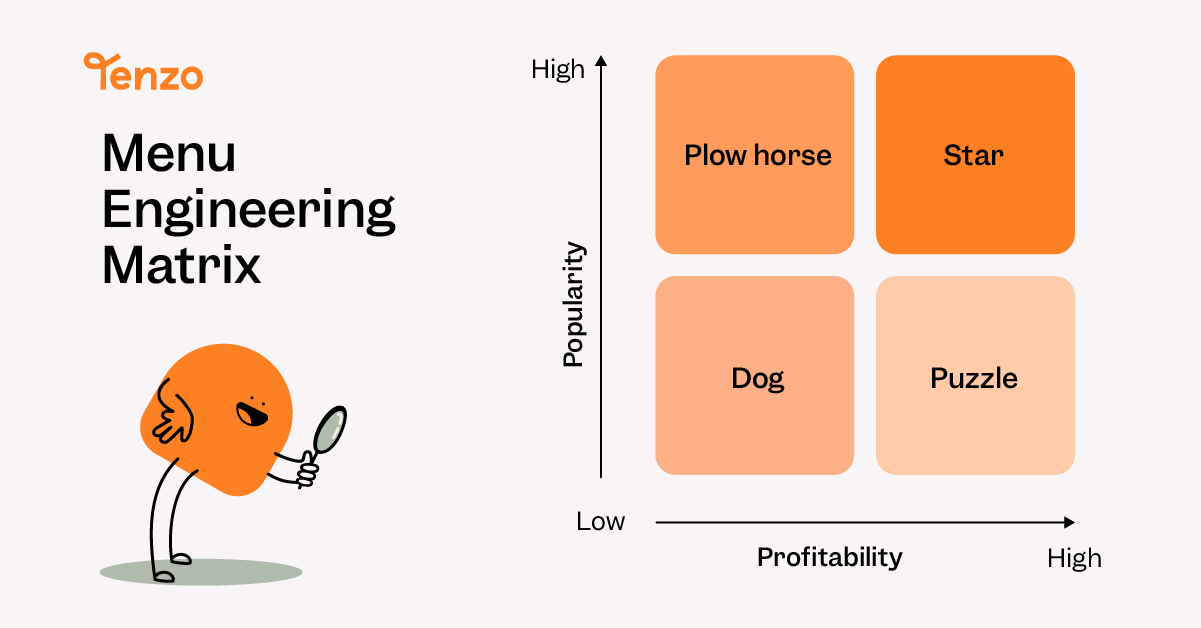
Quickly group your menu item the four quadrants: Dogs, Puzzles, Stars, and Plow Horses
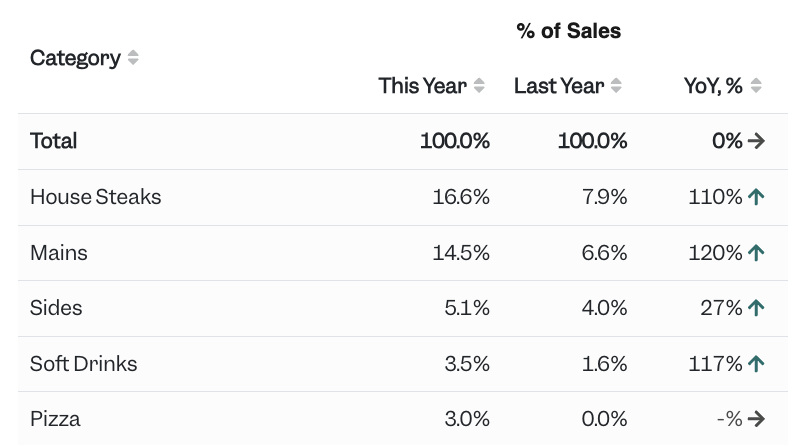
Set a contribution margin target for every menu category #
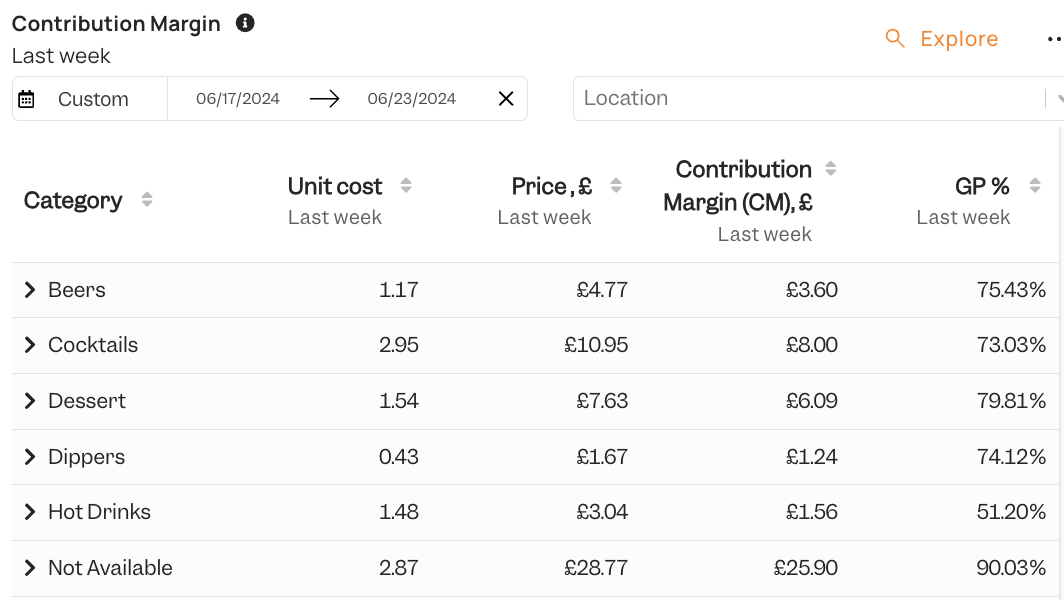
Start at category level, not item level. Pull unit cost, price, contribution margin and GP% for every category, then decide what each one should be earning. Sides, appetizers and mains will all have different contribution margin and GP% goals.. Most items in a category should land on target.
Find the items dragging each category down #
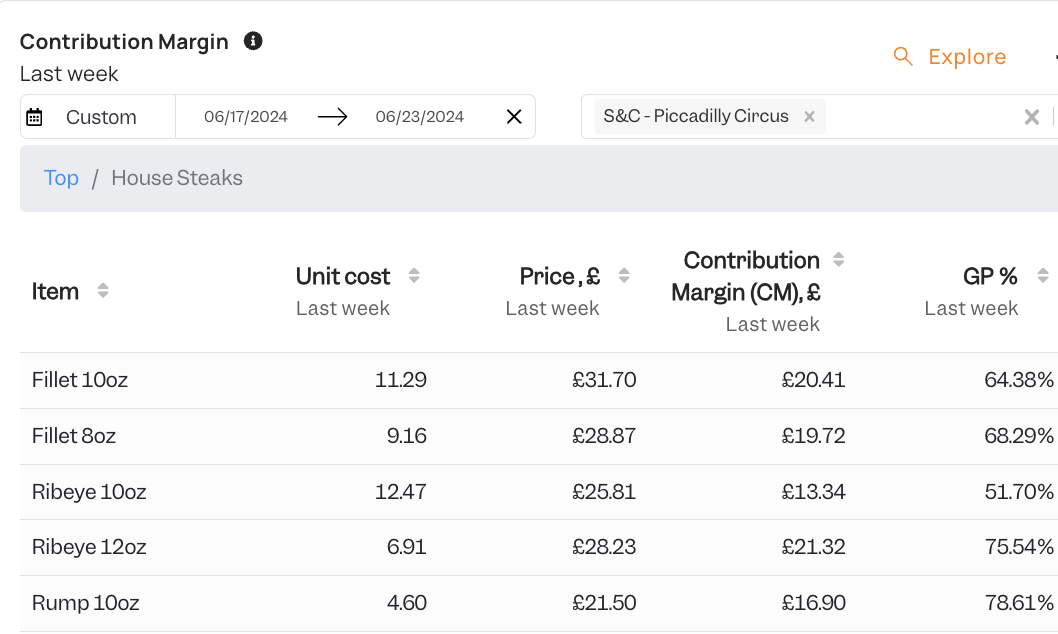
Open the categories sitting under target and look inside. Two steaks at nearly the same price can be twenty points apart on GP because of what’s on the plate. Rank by contribution margin in pounds, not GP%, or you’ll spend the meeting chasing percentages on cheap items.
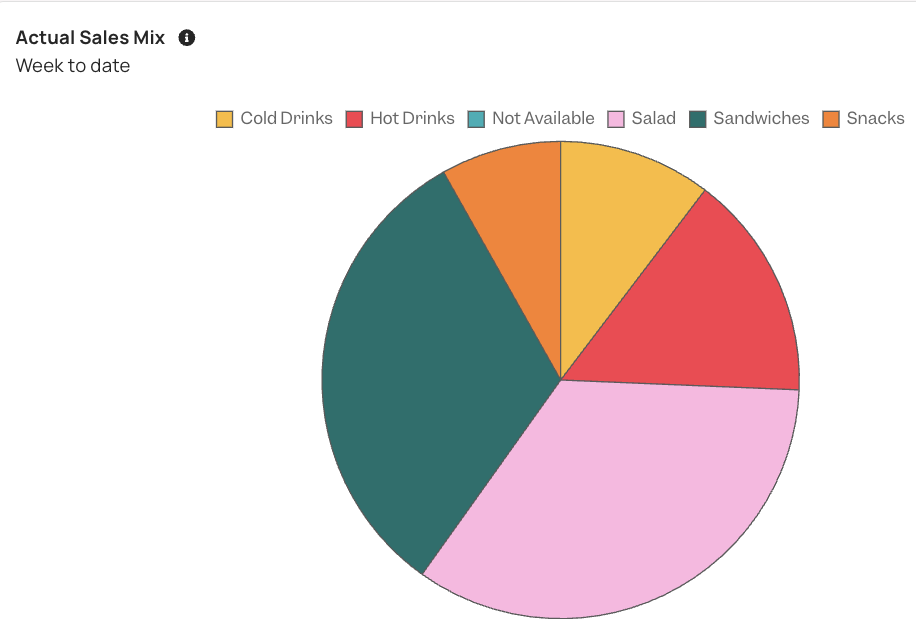
Understand the Impact of Sales Mix #
You can develop a great GP% on paper, but what guests actually order by day part throughout the day will affect your actual profitability of your store, so it’s important to understand your sales mix by category and item
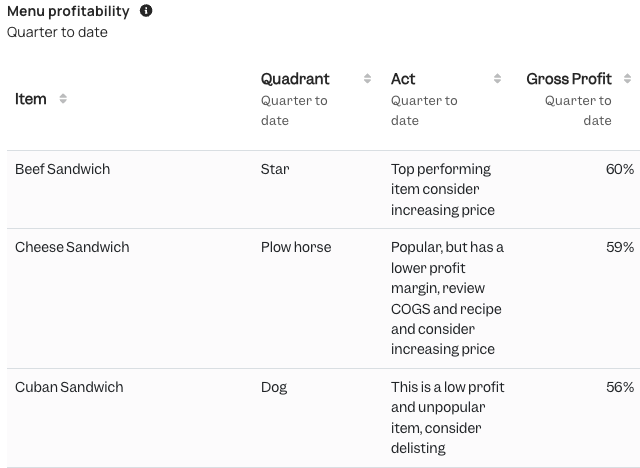
Put every item in a quadrant and act on it #
Profit on one axis, popularity on the other. Stars earn a price rise. Plow horses sell well but earn too little, so review the recipe and the spec before you touch the price. Dogs come off. Tenzo scores each item and writes the recommended action beside it, so the menu meeting argues about the decision instead of the numbers.
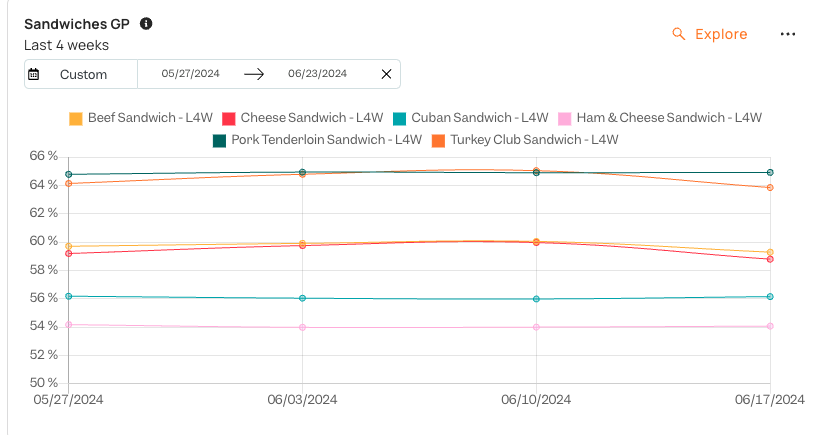
Understand profitability changes by month #
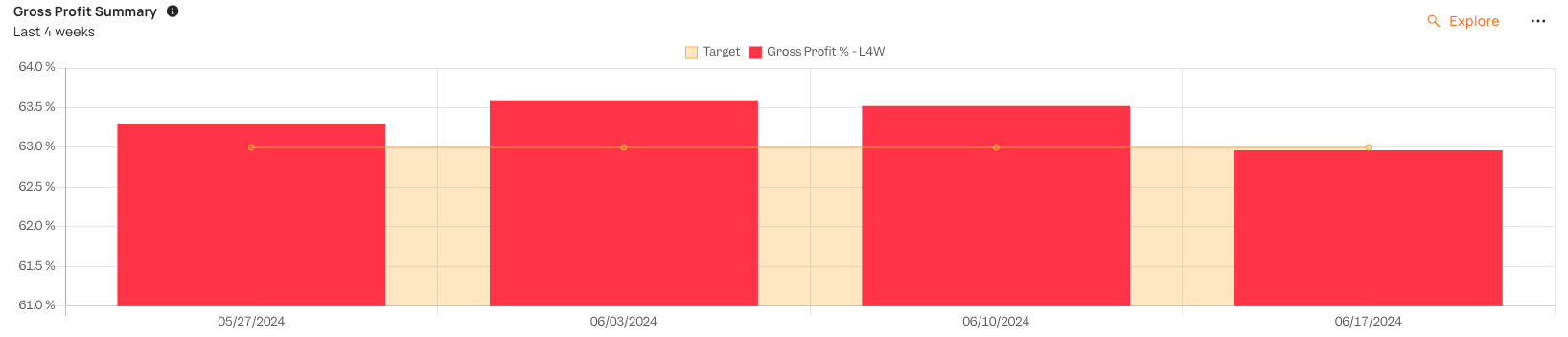
If you’ve noticed GP drift, it’s important to be able to zoom and understand which menu items are impacted. If a specific menu item’s GP has decreased over the past few months, its important to consider (a) raising prices (b) switching suppliers or (c ) changing the recipe
What is menu engineering? #
Grading every item on your menu by how profitable it is and how often it sells, then acting on the answer. Profitable and popular items get a price review. Popular but low margin items get a recipe review. Items that are neither come off the menu. It’s a pricing and menu design exercise, not a cost cutting one.
What data do I need before I can run it? #
Sales by item from your POS, and a cost for every item. The cost usually comes from your recipes and ingredient prices in inventory or purchasing. Tenzo pulls both and works out contribution margin per item, so nobody has to build it in a spreadsheet.
What are the four menu engineering quadrants? #
Star (high profit, high popularity), Plow horse (low profit, high popularity), Puzzle (high profit, low popularity) and Dog (low profit, low popularity). Each one has a different action: price up the stars, re-cost the plow horses, market the puzzles, de-list the dogs.
How often should we re-run this? #
A full menu review two to four times a year, timed with menu changes. But track contribution margin by item weekly, because ingredient prices move and your GP moves with them.
How much margin does menu engineering actually recover? #
Public House expect a 3–4% GP improvement, worth hundreds of thousands of pounds a year across the estate. Most of it comes from re-pricing items that were already selling well and dropping items nobody was ordering.


