
Give every general manager a live view of where they stand against their labour target and their forecast — daily, and inside the shift, rather than in next month’s P&L. It works because an accurate sales forecast and a visible daily target let teams add or cut hours while there is still a shift left to change. Sushi Dog cut labour cost by two percentage points across 16 UK sites.
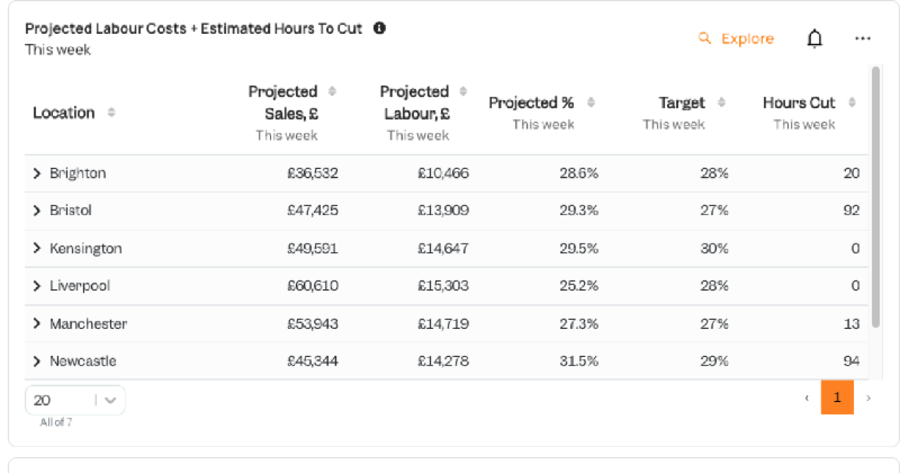
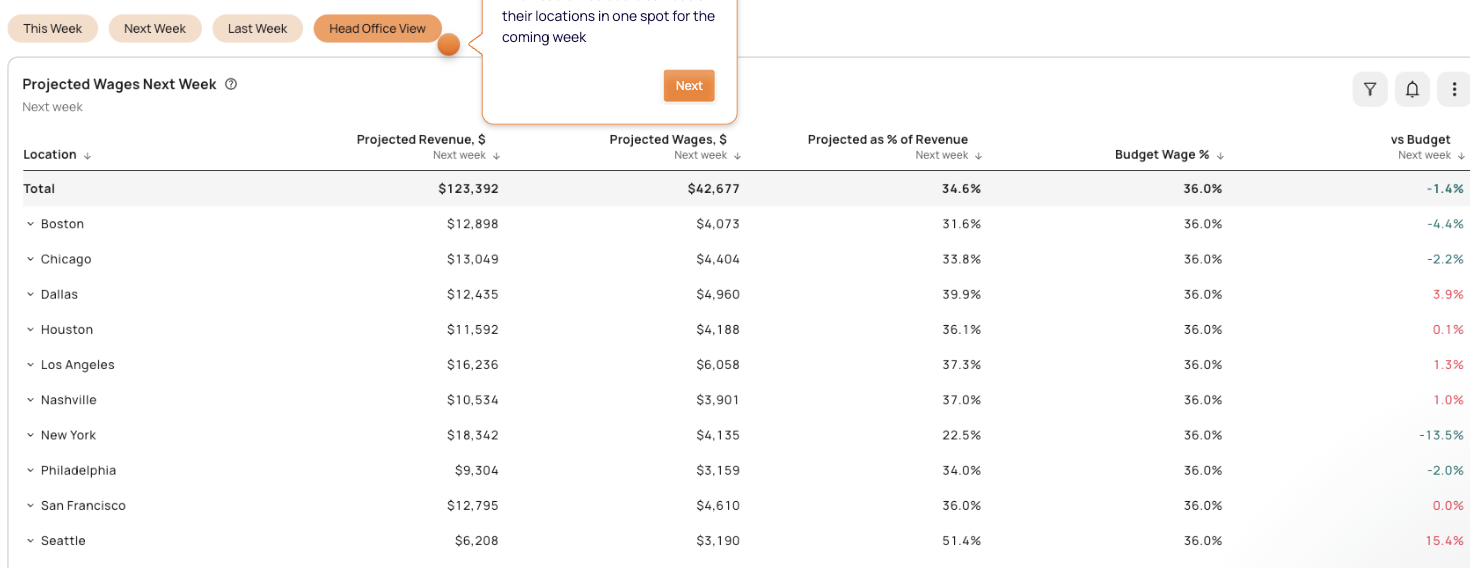
Projected labour cost against target for every site, with the hours to cut already worked out. One screen, every site, before the week is lost.

“Tenzo’s dashboards gave us the visibility we needed over what we were spending on labour. Tenzo helped contribute to a 2 percentage point reduction in labour costs.”
Set what good looks like #
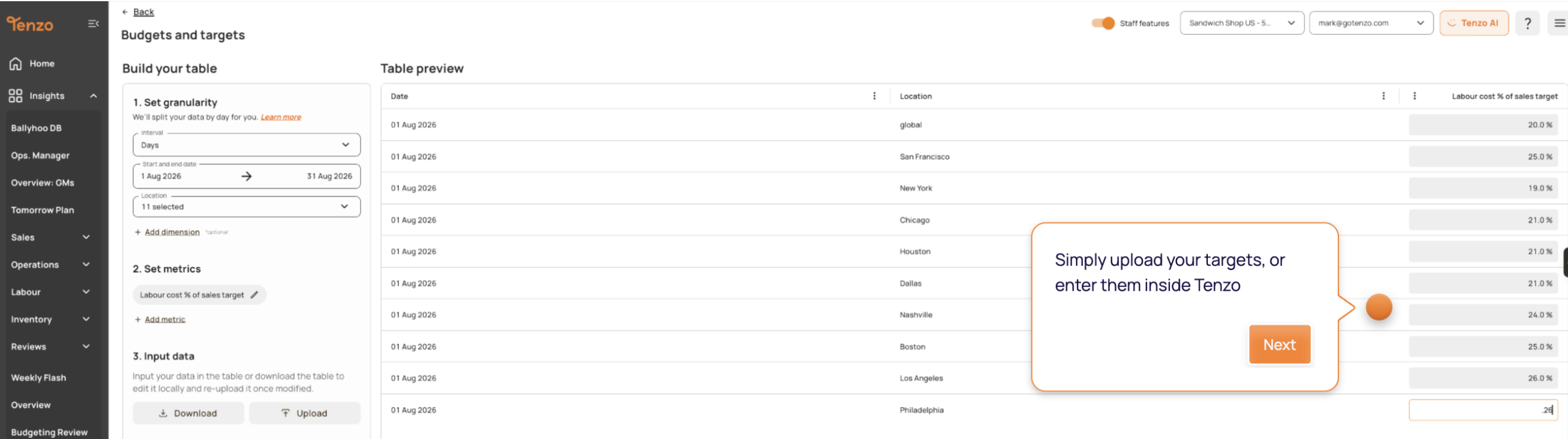
Upload your labour budgets and targets by site and by day. Tenzo runs against the numbers your business is already accountable to rather than a generic industry benchmark, so what a manager sees on the dashboard is the same number their area manager will ask about. You cannot manage to a target the team cannot see.
Predict your sales #
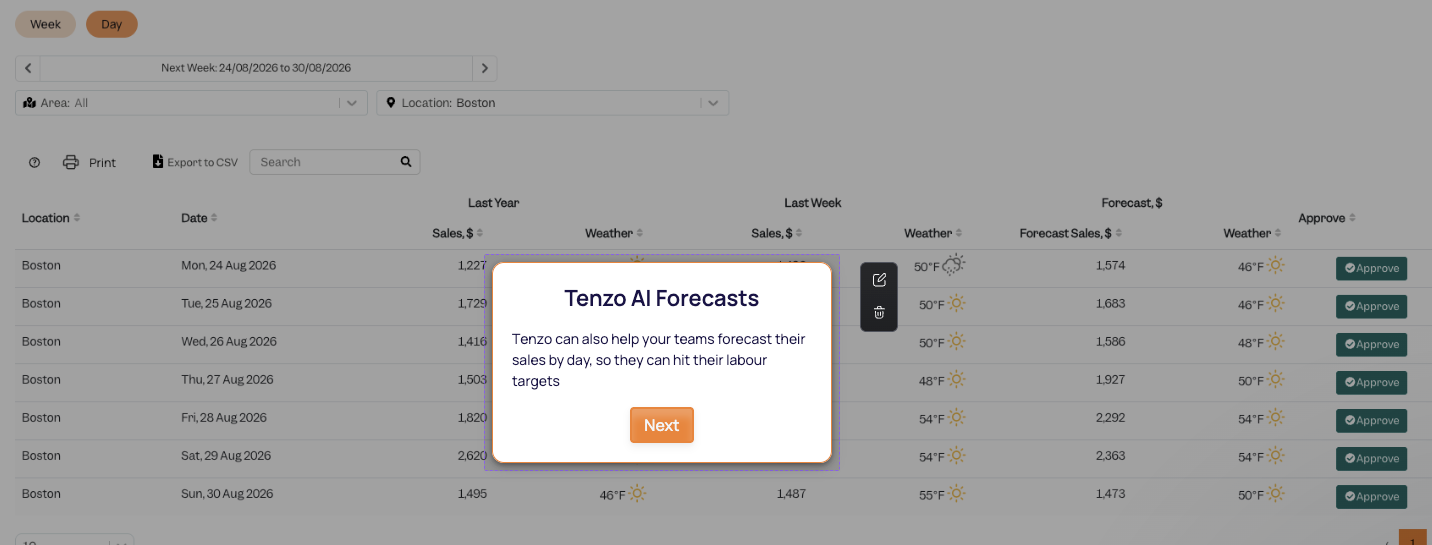
Tenzo’s machine learning models read weather, local events and trading history to forecast sales up to 60% more accurately than a rolling four-week average. Labour planning is only ever as good as the sales number underneath it — get the forecast wrong and every rota built on it is wrong too. Don’t leave the forecast to gut feel.
Give managers real-time visibility #
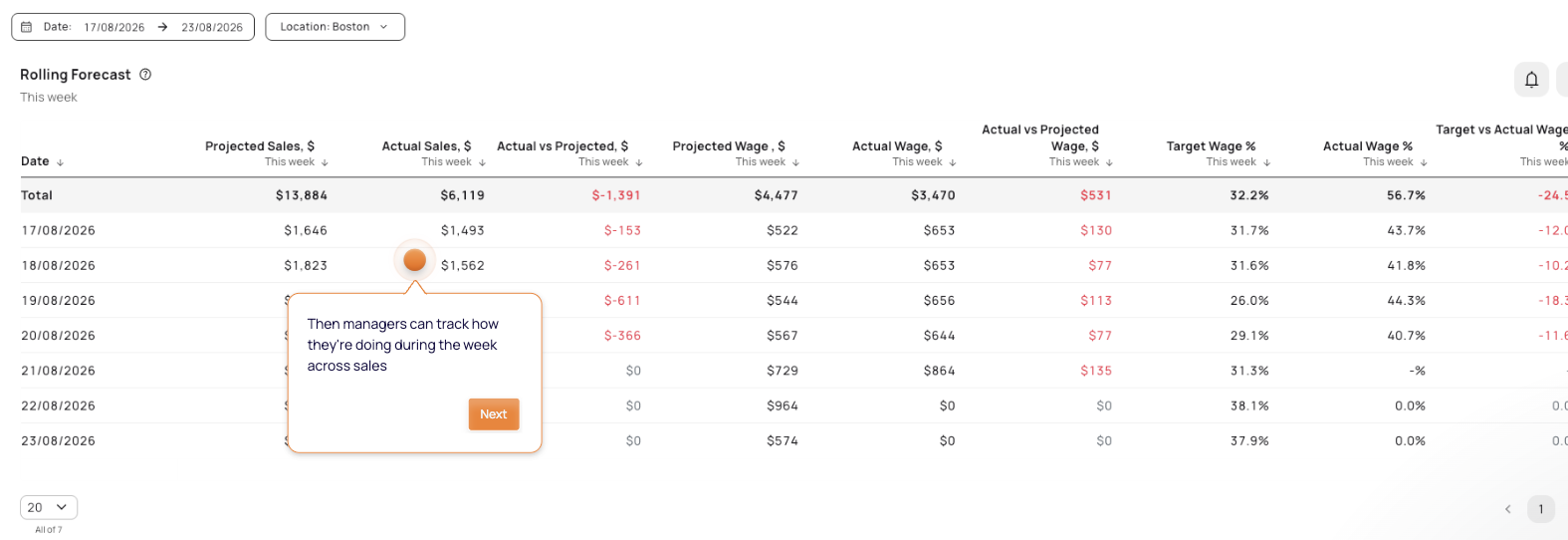
Managers see daily actuals against the weekly target and the forecast, so a bad Tuesday is something they can still trade out of by Saturday. Weekly-only reporting tells them the week went wrong after it already has. A forecast is never perfect — what matters is how quickly the team reacts when it is wrong.
Help teams make better intra-day decisions #
No forecast is ever exactly right, so teams need to be able to move during the day. Tenzo shows whether a site is running behind or ahead, and how many hours to cut or call in to land on target — while there is still time in the shift to act on it.
Make sure next week’s schedules are optimal #
Before the rota is published, teams compare scheduled hours against next week’s forecast and target, site by site and day by day, and fix the overage while it is still a draft. The cheapest hour to cut is the one you never scheduled.
How do you reduce labour costs in a restaurant without cutting service? #
Forecast sales accurately, set a daily labour target each site can see, and give managers the ability to adjust hours during the shift rather than reviewing the week afterwards. Most labour overspend is not caused by paying too much — it is caused by hours being scheduled against a sales forecast that turned out to be wrong, and nobody noticing until the week closed. Sushi Dog used this approach across 16 UK sites and reduced labour cost by two percentage points.
What is a good labour cost percentage for a restaurant? #
Full-service restaurants typically run labour at around 30–35% of revenue and quick-service closer to 25–30%, but the useful target is your own, not the industry’s. Labour ratio varies enormously by format, location, wage floor and how much prep is done in-house, so a single benchmark tells a site very little. What moves the number is setting a target per site per day that reflects how that site actually trades, then tracking against it daily.
How accurate are AI sales forecasts for restaurants? #
Tenzo’s forecasts run up to 60% more accurate than a rolling four-week average, because the models take in weather, local events and trading history rather than just repeating recent weeks. That matters for labour because the rota is built on the sales number: a forecast that misses a heatwave or a home fixture puts the wrong number of people on the floor before anyone has made a scheduling mistake.
How do you control labour costs during a shift? #
Give the manager on duty a live view of actual sales and labour spend against the day’s target, with a clear read on how many hours to cut or add to land on it. Intra-day control is where most of the recoverable cost sits, because a quiet Tuesday lunch can still be traded out of at 3pm but cannot be fixed on Monday when the payroll report lands.
What systems do you need to connect to track labour cost in real time? #
A POS for sales and a scheduling or rota system for hours. Tenzo connects to 90+ POS platforms and the main scheduling tools, then joins the two so labour cost is shown as a live percentage of sales rather than a figure reconciled at period end. If your rota lives in a spreadsheet, that can be uploaded, but the intra-day view works best where the schedule is in a connected system.


