
Most end-of-day reports ask a closing manager to type in numbers the system already knows. This recipe flips that round: sales, labour cost, covers and spend per head land in the log automatically, so the manager only writes the part no system can — what actually happened on the floor.
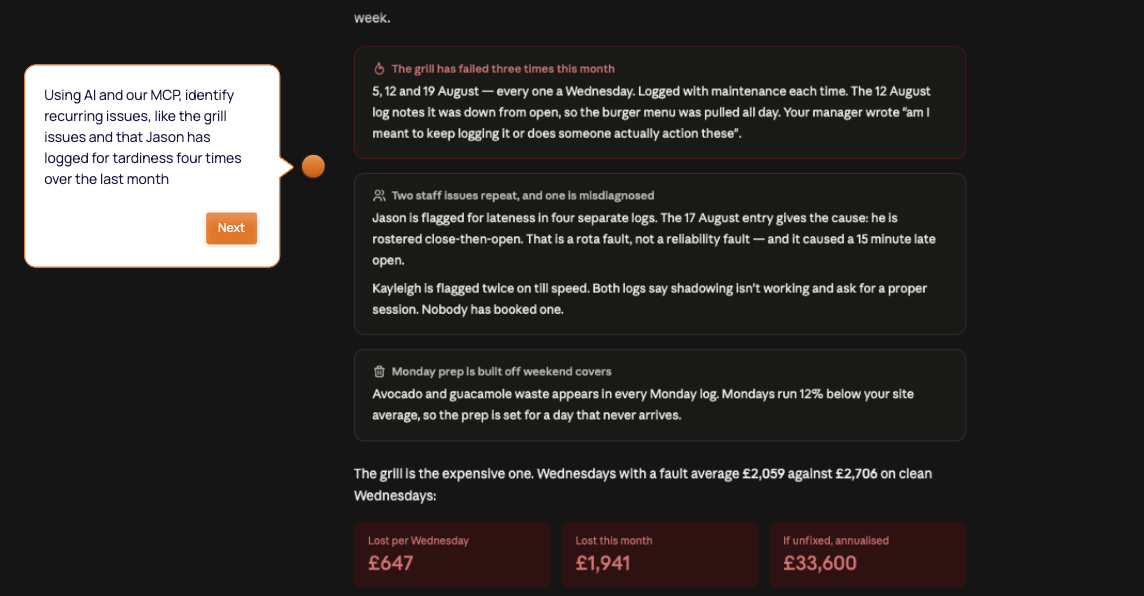
Because the numbers and the notes then sit in one place, you can ask why a day went the way it did and get an answer that includes the grill being down for the fourth time in a row.
Public House saved 5 hours a week. Generator Hostels cut reporting time by 75% across 19 properties — read the case study.

“The biggest, quickest win that I’ve had is in our end-of-day reporting. By consolidating managers’ end of night commentary with accurate figures, and having this automatically delivered at 6am in one email, our teams all know what they need to focus on for the day the minute they check their emails in the morning. Tenzo has likely paid for itself with that one function.”
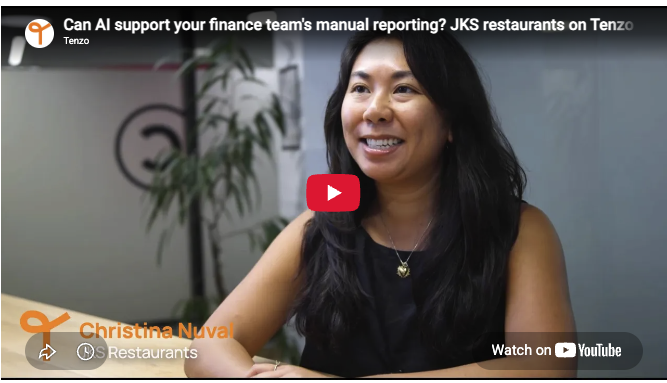
Christina Nueval, Finance Director at JKS Restaurants — 20 sites across the UK, USA and UAE, seven Michelin stars — on getting the day’s numbers and the day’s context in one place.
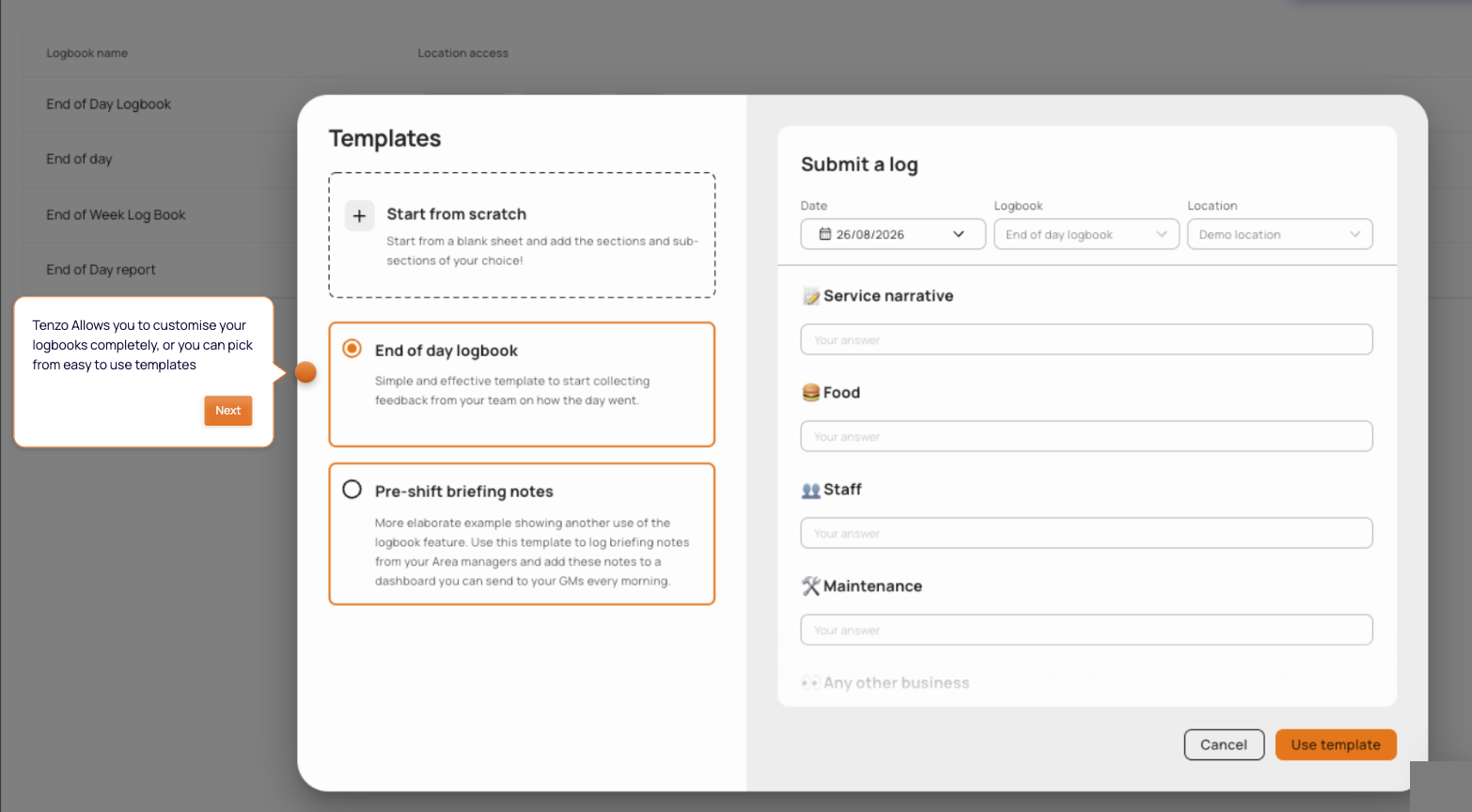
Build a log template that matches how you actually close #
Tenzo’s logbook templates are yours to design — free text, structured fields, or both, in whatever order your close-down actually runs. Different formats can carry different templates, so a bakery closing once a day isn’t filling in the same form as a restaurant closing by day part. One template per site, not three. Competing end-of-day forms are the fastest way to kill logbook adoption.
Put the numbers on the page so nobody retypes them #
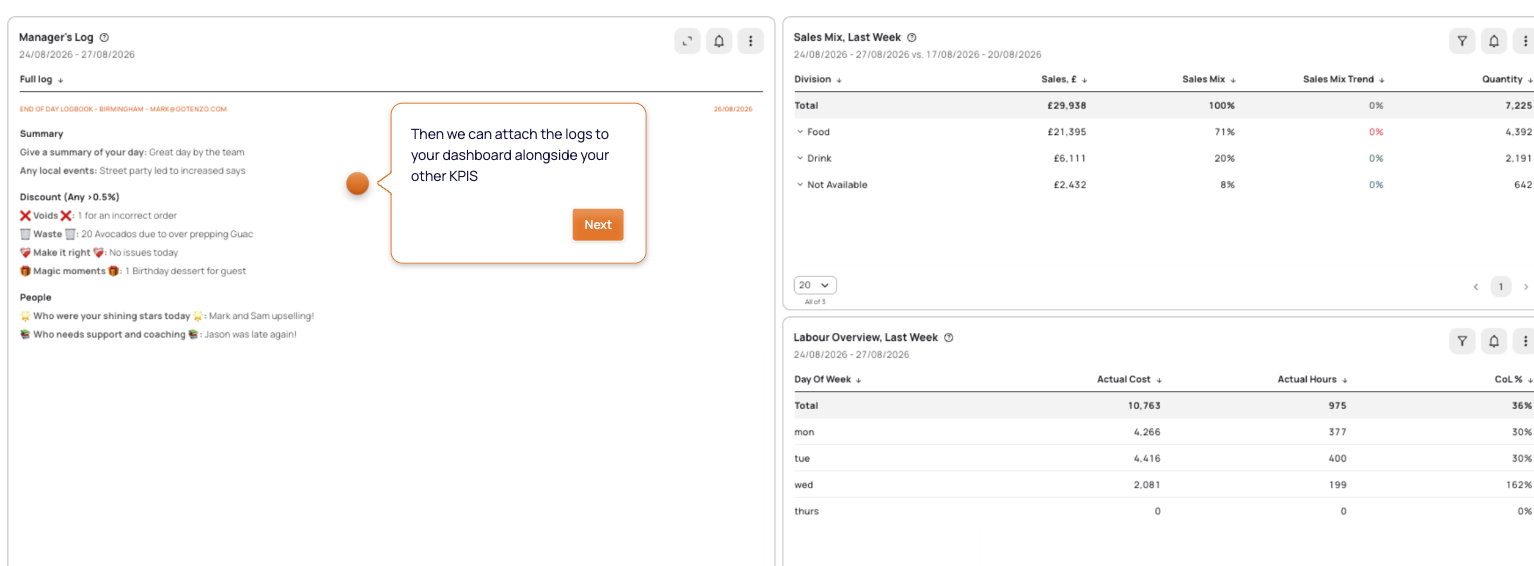
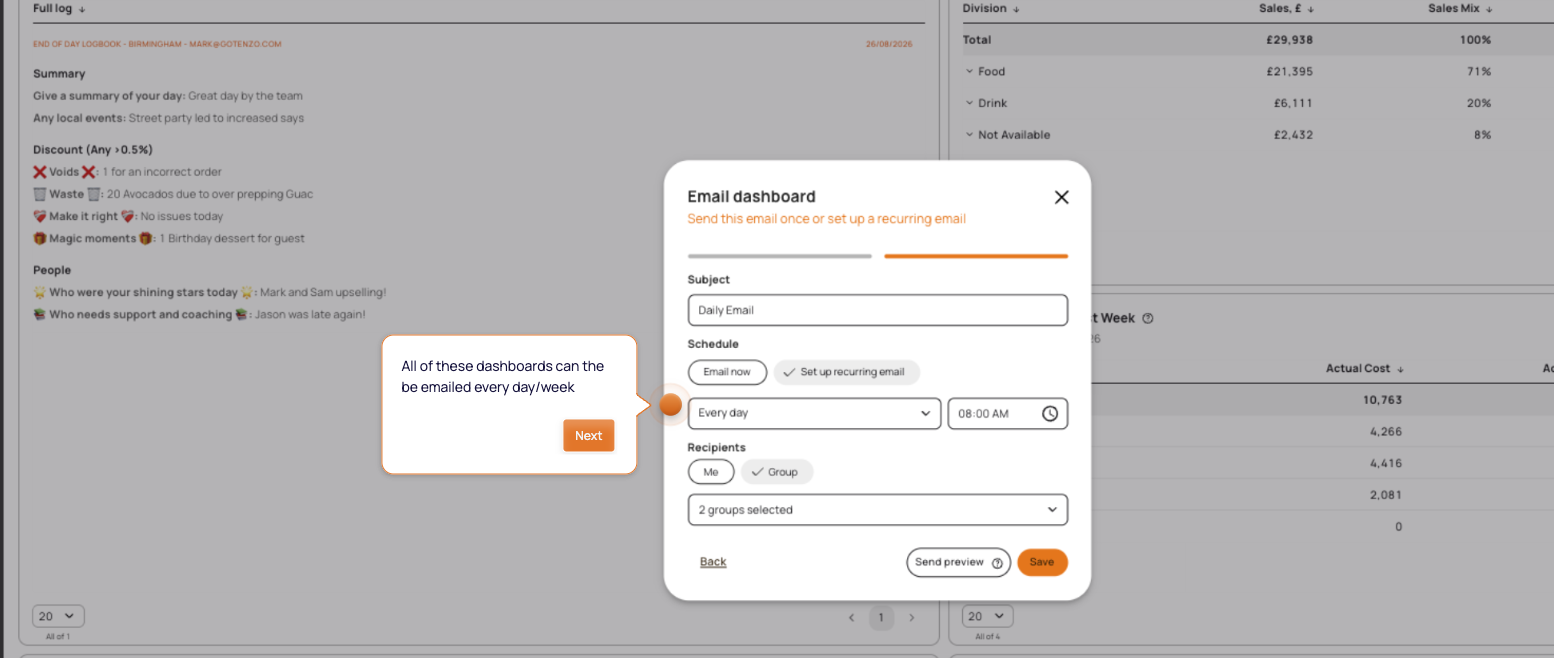
Place the log on a dashboard next to sales, labour cost, covers and spend per head, pulled straight from the POS and the scheduler. Managers stop transcribing figures they can already see — and stop introducing the transcription errors that make people distrust the whole report. Managers should only ever be typing the qualitative. The quantitative is already in the system.
Managers write end-of-day reports #
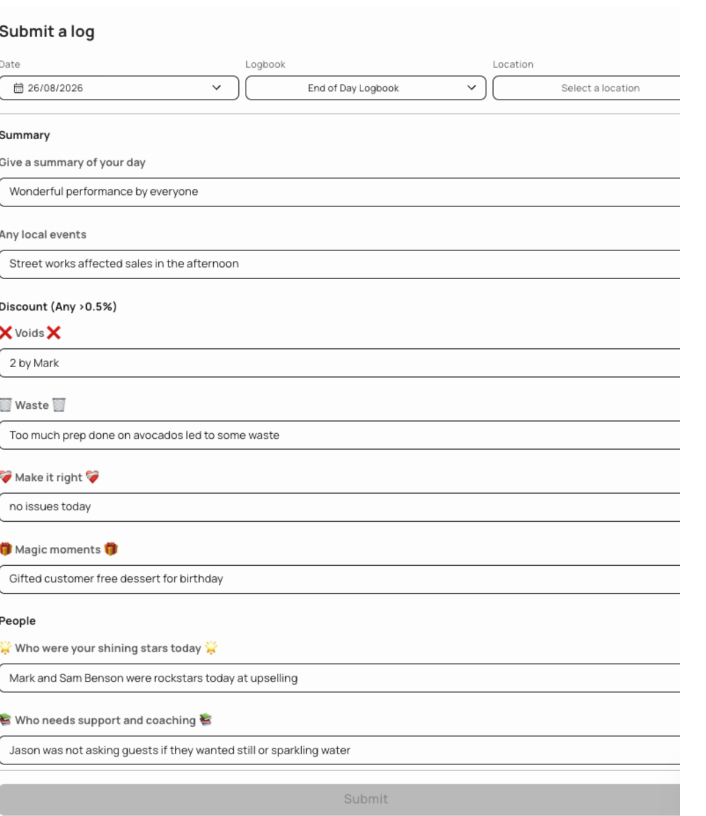
On their phone or in the web app, managers write down only what the POS and the other tools never capture. No transcription, no errors, no wasted time at the end of a long shift. The manager’s comments add incredible context to your KPIs.
Email the whole thing out every morning #
The completed log goes out with the day’s numbers attached, so ops directors, head chefs and finance open one email and get both halves of the day. No chasing, no separate report, and no version of events that only exists inside one manager’s head. Context that arrives late reads as history. Context that arrives at 7am gets acted on.
Ask the logbook why #
Because the notes and the numbers live together, you can query weeks of logs in plain language and get answers with the reason attached. Ask why last Tuesday missed and you get “covers were down 18% and the grill was out for the fourth time in a row” rather than a red cell on a report. Recurring equipment faults, repeat no-shows, the same dish coming back — patterns nobody spots reading logs one night at a time. The numbers tell you what happened. The logbook tells you why. Together they tell you what to fix.
What is a restaurant end-of-day report? #
An end-of-day report — also called a daily log, shift log or logbook — is the record a closing manager completes at the end of trade. It has two halves: the day’s figures (sales, covers, labour, spend per head) and written notes on what happened (staffing, equipment, guest issues, maintenance, VIPs, incidents). Traditionally it is a paper form or spreadsheet where the manager copies the figures across from the POS by hand. In Tenzo the figures populate automatically and the manager writes only the notes.
How long should an end-of-day report take to complete? #
A few minutes, if the numbers are already there. Most of the time in a traditional end-of-day report goes on transcribing figures — sales by day part, covers, labour hours, spend per head — out of the POS and the rota and into a form. Once those fields populate from the systems that already hold them, the manager is left with the written sections only, which is the part that genuinely needs a person.
What should a restaurant daily log include? #
Two halves. Quantitative: sales by day part, covers, average spend per head, labour cost and hours against target. Qualitative: manager on duty, briefing points, training delivered, kitchen and bar notes, maintenance issues, no-shows and cancellations, events, VIP or press visits, and a summary of how service ran. Keep the quantitative automated and give the qualitative enough structure to be searchable later — unstructured free text is hard to query across months.
Can you use AI to analyse restaurant logbooks? #
Yes, and this is where a digital logbook pays for itself a second time. Because the written notes sit alongside the numbers, you can ask questions in plain language across weeks or months of logs: why a site underperformed on a particular day, which equipment keeps failing, whether a dish is generating repeat complaints, what your strongest trading days have in common. Reading logs one night at a time surfaces incidents. Querying them in aggregate surfaces patterns.
How do you get managers to actually complete the daily log? #
Make it short, make it mobile, and run one template. The three things that reliably kill logbook adoption are asking managers to retype numbers the system already holds, running competing end-of-day forms so nobody knows which one to fill in tonight, and splitting maintenance or incidents into a separate log so the same fridge fault gets recorded in two places or neither. Fix those three and completion rates look after themselves.
How is this different from Avero or Toast logs? #
Unlike Avero and Toast, these logs and daily reports can carry the full operating picture — reviews, reservations, inventory and labour data alongside sales. Avero is usually just sales data, though it has limited integrations for labour and staff scheduling, and it misses reservations and reviews tools such as OpenTable, SevenRooms and Resy. If the log is meant to explain a day rather than just report it, it needs all of those inputs in one place.


